“Without fear or favor”

Haley Van Erem has been seeking justice for a long time

Joseph Weber

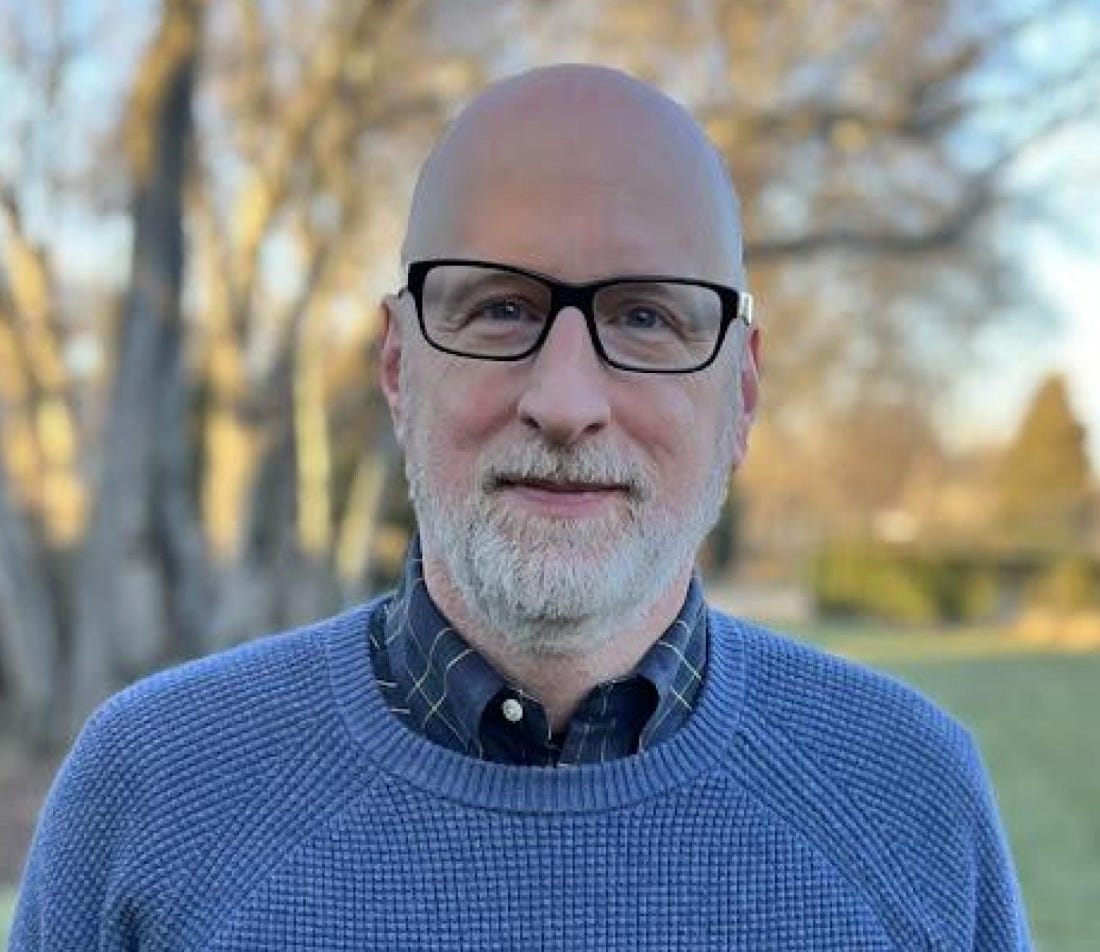
Haley Van Erem as a student, Source: FSU College of Law

Fourteen years ago, an idealistic Florida State University law student saw something very wrong and, with the help of colleagues, set out to set it right. State authorities blocked her at every turn.

Now that she’s a far more seasoned lawyer, Haley Van Erem is doing the same thing again. But this time, it’s the Trump Administration that she’s tangling with.

Van Erem in 2012 was part of a project at FSU’s Public Interest Law Center that brought suit against Florida to try to get children with complex medical needs out of nursing homes and back into their homes with proper support. The children – who numbered more than 200 back then – were “medically fragile.” Some required 24/7 care that included ventilators.

Still, many of their caregivers wanted them home.

“The saddest part of all is not that these children have nowhere to go. That’s what a lot of people would assume,” Van Erem told the Florida Bar News. “A lot of families are asking for support and want their children at home. Our goal is to get these children back with their families, with adequate support.”

It took more than a decade of litigation, but in 2023 a federal court ruled that the state violated the Americans with Disabilities Act by institutionalizing the children. The court ordered Florida to ensure that the youngsters – then numbering about 140 –get access to needed services while at home and in their communities, as the U.S. Justice Department’s Civil Rights Division reported.

As it happened, Van Erem was working at the time in that division, where she had served as a career DOJ attorney for nearly a decade. While there, she racked up a slew of honors, including Special Commendations in 2019 and 2023, Distinguished Service Awards in 2019, 2022, and 2023, and a Cooperative Achievement Award in 2017 for interagency work.

None of that seems surprising, in light of her work at FSU and her earlier days as a Phi Beta Kappa student at Arizona State University. As a junior studying social work, she won a grant to study in Spain. For years, Van Erem has been a proven achiever, as well as someone with a keen eye for right and wrong.

But her tenure in the once-distinguished Civil Rights Division was upended by Donald J. Trump and his minions at the department. And the demands put on Van Erem and her colleagues have led to an exceptional whistleblower complaint that claims there was no legal or factual basis for probes into antisemitism at Brown, Columbia and Harvard. Recall that those allegations have wreaked havoc at the schools.

Recall, too, that Brown and Columbia settled their disputes with the Trump Administration by agreeing to pay $50 million and $200 million, respectively, mainly because Trump had cut off far larger amounts of federal funding to the schools. Harvard has been fighting, however, and the Trump administration was ordered last year to reverse more than $2.6 billion funding cuts to the school, with a federal judge saying the government “used antisemitism as a smokescreen for a targeted, ideologically-motivated assault on this country’s premier universities.”

More recently, a different judge dismissed a Trump administration lawsuit that accused Harvard of turning a blind eye to harassment of Jewish students. This was a major setback in Trump’s war on academia.

As PBS reported, Van Erem’s complaint alleges that investigations into the schools were designed to strong-arm them into cutting deals for political purposes. Outcomes of the investigations were “predetermined, without regard to the evidence” in a “politically mandated effort” to extract money from schools through settlement demands and funding freezes under the pretext of rooting out antisemitism, the complaint alleges.

In other words, rather than undertake good-faith probes and charge offenses based on the facts, Justice’s lawyers were using the department as a cudgel to achieve Trump’s political end – humbling the schools.

The complaint makes for fascinating reading.

In March 2025, for instance, it says Van Erem and some of her colleagues were reassigned to a task force investigating alleged antisemitism in medical schools at Brown, Columbia, Cornell and Harvard. The lawyers got a memo informing them that the investigations were “based on a New York Post article that alleged anti-Semitic activities at numerous medical school commencement ceremonies.”

Source: New York Post

Some students, according to the newspaper, had shouted “Free Palestine” and worn Palestinian flags or keffiyehs at the graduation ceremonies – repulsive expressions, perhaps, but protected speech, according to the complaint. “It was not unheard of for news reporting coupled with additional evidence to lead the DOJ to initiate further scrutiny of potential statutory violations, but opening an investigation based on a single article was highly unusual,” the complaint notes.

Still, the lawyers expected rigorous investigation, the complaint says. Instead, they were told that the probe at Columbia – a particular bête noire for Trump — had widened to seek out antisemitism at the entire university.

The staff, it seemed, had found no evidence of liability at the medical schools but, together with the funding cuts, the DOJ was determined to pound the schools into settlements. The efforts “reflected a predetermined, outcome‑driven approach to enforcement rather than a fact‑based investigative process,” the complaint says, “… staff were encouraged to invert the standard sequence of investigation, compliance review, and legal analysis and instead work backward from desired settlement terms, including provisions not directly tied to substantiated Title VI anti‑harassment or antisemitism violations, to generate proposed findings that would support those terms.”

Title VI prohibits discrimination based on race, color or national origin in institutions receiving federal funds.

At Brown, in particular, Van Erem and her colleagues were told to interview Middle East Studies professors, particularly Muslims, to try to elicit antisemitic statements, according to the complaint. She and her colleagues felt it was an “attempt to intimidate those professors and was rooted in Islamophobic assumptions that Middle East Studies professors would harbor antisemitic viewpoints rather than any actual evidence of complaints about antisemitism.”

But, to the consternation of their superiors, Van Erem and her colleagues found insufficient evidence to support allegations of Title VI violations.

At Columbia, investigators found evidence of discrimination, but Van Erem and her colleagues argued the investigation was a rush job done before “adequate factual development and legal review were completed” and relied on allegations that “were unsupported, based on news reports or litigation filings, or that implicated protected First Amendment activity.”

DOJ’s representatives on the task force were given only hours to review claims that officials hoped to cite to justify an administration finding that the university had violated Jewish students’ civil rights, as The Washington Post noted. As the newspaper reported, in some cases the claims involved little more than activists’ expressions of support for Palestinians.

“My main concern is that a lot of these [examples] involve protected speech and this document should not imply that those incidents are the basis of a Title VI violations,” Van Erem wrote.

When the pressure from her supervisors persisted, the career DOJ lawyer decided her days in the department were over. Van Erem “was unwilling to be made vulnerable to further participation in politically motivated investigations unsupported by facts and contrary to law.” She quit on May 30, 2025.

As Democratic Congressman Jamie Raskin put it in a letter to Harmeet Dhillon, an assistant attorney general in charge of the Civil Rights Division, “your ‘investigation’ into antisemitism was fake, a pre-baked frame-up operation thoroughly political in nature.”

Raskin added that “the whole project was designed to harass professors and administrators at major universities, to curtail their freedom of speech and academic freedom, and to strip targeted institutions of hundreds of millions of dollars in grants that they had already been awarded on the merits of their applications.”

Like many other career prosecutors who don’t toe the Trumpist line, Van Erem last fall moved into state prosecution. She signed on as a unit chief at the Office of the Attorney General for Maryland. And, on Aug. 17, she brought the complaint against the feds, with the help of lawyers at the Government Accountability Project. In it, she asks the inspector generals of the departments of Justice and Health and Human Services to investigate “without fear or favor” the abuses she has reported.

Will that request go anywhere? That seems difficult to imagine, now that the Justice Department under Todd Blanche appears overtly to be a vehicle for Trump to pursue institutions and individuals he dislikes. Still, the disclosure of Van Erem’s experiences sheds light on just how perverse the department has become.

It took years, but Van Erem prevailed in Florida. That may again happen in D.C., though it may require that someone new occupy the White House and that the Department of Justice be led by someone independent, fair-minded and truthful — in other words, someone as interested in justice as Van Erem is.

“Drest in a little brief authority”

Trump’s disdain for anyone checking him just gets worse and worse

Joseph Weber

Portia, source: Shakespeare Retold

In Shakespeare’s classic play “The Merchant of Venice,” Portia saves the life of her friend Antonio with a clever legal dodge. Even though the lender Shylock has the right to take a pound of flesh from the man because he defaulted on a loan, Portia convinces a court that their contract does not allow Shylock to take any blood:

“This bond doth give thee here no jot of blood;/The words expressly are ‘a pound of flesh:’/Take then thy bond, take thou thy pound of flesh;/But, in the cutting it, if thou dost shed/One drop of Christian blood, thy lands and goods/Are, by the laws of Venice, confiscate/Unto the state of Venice.”

Ah, such a wonderful loophole. No doubt, lawyers have exploited terms such as that for centuries, finding ways to wiggle out of a contract or sidestep a judge’s orders or stated law.

But is it seemly when a president tries this?

Donald J. Trump and his toadies on the board of the John F. Kennedy Center for the Performing Arts are aiming to do just that with a move to add to that title the phrase “Restored and Renovated by President Donald J. Trump,” as well as by renaming the grounds “President Donald J. Trump Plaza” and by prominently etching the words “Endowed by the Trump Kennedy Center Fund.”

The idea is that Judge Christopher R. Cooper, in his May 29 order requiring Trump’s name to be stripped from the center’s facade, spoke only to the proper name of the building, not to phrases – or names — that might otherwise adorn it, even if they appear as prominently as the place’s name itself.

“The Court has concluded that the Board overstepped its statutory bounds by unilaterally renaming the Kennedy Center after President Trump. In 1964, Congress deliberately rechristened the ‘National Cultural Center’ the ‘John F. Kennedy Center for the Performing Arts,’” the judge ruled. “[So] the Kennedy Center Board’s decision to rename the Center, along with its decision to affix President Trump’s name to the building’s façade, violate Congress’s unequivocal mandate. As stated at the outset, Congress gave the Kennedy Center its name, and only Congress can change it.”

It’s likely that Judge Cooper will be asked to rule on the new proposed changes again. Ohio Democratic Rep. Joyce Beatty, an ex-officio member of the center’s board who was one of three nays on the “Renovated By” resolution, called the group’s action “a transparent effort to circumvent the Court’s ruling,” adding that it “flies in the face of the statutes that Congress passed.” She vowed to fight.

The move by the board, which Trump heads, not merely flies in the face of law, but spits in the eye of the judge, a Barack Obama appointee. Recall that Trump had accused Cooper of ruling against him “because his wife probably told him to do so,” arguing that Cooper’s wife, former federal prosecutor Amy Jeffress, was “a Radical Left Democrat” and that the judge should be brought up on charges because that amounted to a conflict of interest.

Good luck, Donald, with getting a charitable decision now from that judge.

This all amounts to an egomaniac’s childish temper tantrum, of course. One imagines him stamping his feet and saying: “So there.” But it represents something much bigger – Trump’s inability to recognize that no means no, at least when a court declares that.

At times, the consequences of Trump’s refusal to countenance any check on his power can be far more dire than just a few letters etched into marble on a Washington landmark. To cite some recent examples, the Supreme Court has ruled against him on three major fronts – on tariffs, on an appointee to the Federal Reserve Trump dislikes and on birthright citizenship – and on all three Trump and his minions are making efforts to sidestep the rulings.

The administration’s loophole-hunting efforts, detailed in a New York Times newsletter, amount to what an article in The Duke Law Journal called “legalistic noncompliance.” The article’s authors called the sidestepping “deploying the language of the law to shroud what are, in fact, bad faith efforts to evade judicial orders.” Trump’s acolytes insist they are following the letter of the law, as judges interpret that, but they seek to slip around its spirit in whatever ways they can.

Portia would have been proud.

Justices Barrett, Gorsuch and Roberts; source: Slate

But let’s look further. What does Trump say of the judges in some of those cases? He called his appointees Neil Gorsuch and Amy Coney Barrett “weak, stupid, and bad” and an embarrassment to their families.” Worse, the justices were “fools and lapdogs for the RINOs and the radical left Democrats.”

Presidential language, for sure.

So, will Trump and his Justice Department bootlickers now accept another federal judge’s recent dismissal of an antisemitism case against Harvard? “We disagree with the ruling and are assessing next steps,” Assistant Attorney General for the Civil Rights Division Harmeet Dhillon said in a statement.

In other words, no won’t mean no, if the Trumpies can come up with a legal dodge or loophole.

At times, the administration’s arrogance is so deep that it hasn’t bothered to even come up with some workaround. It has just defied the courts. Most infamously, Trump’s lackeys in the spring of 2025 defied an order by Judge James E. Boasberg to not deport 200 migrants without a hearing. Three planes shipped the people out to El Salvador anyway.

Recall that Trump called Boasberg “a Radical Left Lunatic of a Judge, a troublemaker and agitator” who should be impeached, earning a rare rebuke from Supreme Court Chief Justice John Roberts. Boasberg was appointed to separate judicial posts by George W. Bush and Barack Obama and served on the U.S. Foreign Intelligence Surveillance Court.

Perhaps someone who deserves a modicum of presidential respect?

But Trump’s disrespect for judges and defiance of their orders goes far further. Between February of 2025 and last spring, district court judges ruled that the administration violated orders in at least 31 lawsuits over a wide range of issues, including cuts in federal funding, mass layoffs, deportations, and immigration practices, as reported by The Associated Press. These violations followed more than 250 instances of noncompliance that judges highlighted in individual immigration petitions — from failing to return property to keeping immigrants locked up past court-ordered release dates. The AP called it “an extraordinary record of defiance.”

Let’s think about Shakespeare again. He often wrote about arrogance.

In “Measure for Measure,” another of his plays, a character bemoans another character’s hubris, saying: “… man, proud man,/Drest in a little brief authority,/Most ignorant of what he’s most assured,/His glassy essence, like an angry ape,/Plays such fantastic tricks before high heaven/As make the angels weep.”

Donald J. Trump and his minions likely are making many weep now, but someday their “little brief authority” and their deceptions and legal sideslipping will fade away. Perhaps the midterm elections will mark the beginning of their end.

President Donald Trump has called for a federal judge to face charges after a ruling that will temporarily halt his renovations at the center and force his name to be removed from the structure (Reuters)

Do Jews have a political home anymore?

The Democratic Party may be driving them out

Joseph Weber

Joe Lieberman, source: NBC

Six years after running unsuccessfully for the vice presidency as the Democratic party nominee, Joe Lieberman in 2006 lost a Democratic primary race in Connecticut for reelection to the U.S. Senate. So, he ran and won as an independent, taking his fourth term, which wrapped up in 2013. In an interview a decade later, he recalled an old quote: “I didn’t leave the Democratic Party; the Democratic Party left me.”

Lieberman stopped himself before repeating the line. Instead, he laughed and, remembering that Ronald Reagan had used the line in 1962, said: “So maybe that’s not a good person to quote to extend a bridge to my fellow Democrats.”

The 24-year senator at that time had kept his Democratic party registration but was working with No Labels, a centrist group that wanted to find an alternative to both Joseph R. Biden and Donald J. Trump in the 2024 election. He said the anger Americans felt toward both parties was unprecedented.

As often happens with third parties, the No Labels group fell apart, unable to find a suitable candidate. Then, months before the election, Lieberman died in March 2024 at 82.

More than anything, the Connecticut senator – an observant Jew who had faulted Democratic President Bill Clinton in 1999 for his “immoral” relationship with an intern — wanted the party to return to its traditional center. He was so turned off by the directions the party was taking that he backed his friend, Sen. John McCain, for president in 2008 and, of course, sought a middle-ground alternative in the year he died.

Now, anti-Israel “progressives” have notched high-profile wins in Democratic primaries in Michigan and Colorado, along with Zohran Mamdani’s rout in New York City, as well as wins by other left-wing candidates there. And many Jews are wondering the same sort of thing as Lieberman did.

Has the party that so many have long supported deserted them?

And it’s not just a matter of the victories in Michigan by Dr. Abdul El-Sayed, a Senate candidate, and House candidate William Lawrence, as well as Colorado House candidate Melat Kiros. Nor is it just the New York primary triumphs of House hopeful Brad Lander, a nuanced critic of Israel, or the more strident Claire Valdez and Darializa Avila Chevalier.

As The New York Times reported, the Democratic Party’s rapid retreat from support for Israel has shown up in pollselection results and votes in Congress. Some 49 percent of Democratic voters quizzed in a May New York Times/Sienna poll strongly oppose providing more economic and military support to the country (while 42 percent of Republicans strongly back such aid). Almost half the Democrats in the House voted in July to end aid to Israel, though the measure failed.

The elections and the opinion shift almost surely will weaken the already wobbling support among many Jews for the Democratic Party. A poll from last year showed that some 68 percent of American Jews backed the party in 2019, but the share dropped to 55 percent by last year. By contrast, roughly just one in four such Jews backed the Republican Party from 2008 to 2020, but the share rose to nearly one in three (32 percent) by last year.

Of course, not all Jews have switched parties. The CES poll shows a rise in the share considering themselves as independents (or backers of others) to 13 percent, up from just below 10 percent in 2024. It’s possible that share includes folks who might be as mad at both parties as Lieberman said many were in 2024.

And any analysis of the changes has to be loaded with caveats. For one, while the Israel critics grabbed the headlines, plenty of moderate Democrats also won their contests. As The Week noted, the recent winners in the party’s moderate faction include Rep. Marie Gluesenkamp Perez (Wash.), who fended off a leftist challenger; former Rep. Elaine Luria (Va.) and Richmond-area prosecutor Shannon Taylor, who won swing-district primaries; and Rep. Wesley Bell (Mo.), who bested democratic socialist former Rep. Cori Bush.

Earlier, plenty of pro-Israel candidates won their races elsewhere. These include House Democratic Leader Hakeem Jeffries (who ran unopposed in New York) and Adrian Boafo in Maryland, as well as New Yorkers Yvette Clark, Laura Gillen, Gregory Meeks, Tim Kennedy and others, along with several other incumbents from Maryland, all backed by the American Israel Public Affairs Committee (AIPAC).

What’s more, it may be risky to make too much of El-Sayed’s victory. It was a narrow one, about a single percentage point higher than pro-Israel candidate Haley Stevens, and he prevailed with less than a majority at just under 48.5 percent, according to the most recent count. Moreover, it’s typically the most committed partisans – call some of them extremists– who vote in primaries, so the epidemiologist’s backers may not represent the party faithful overall.

Still, as the Times suggested, El-Sayed’s triumph was “maybe the biggest setback for pro-Israel Democrats.” And, perhaps more than anything, El-Sayed’s victory was a sharp slap in the face to AIPAC, which had spent a stunning $32 million trying to defeat him. The group, instead, gave El-Sayed ammunition, as he made attacking spending by outside groups a key part of his campaign.

Similarly, AIPAC spent heavily a few months ago to try to tarnish a Jewish Democrat in Illinois, Evanston Mayor Daniel Biss, in his race for the House. Biss considers himself a liberal Zionist who is critical of Israel’s current government, a position that is increasingly common among Democrats. AIPAC’s spending backfired when Biss made the group’s opposition a central part of his race.

Whether American Jews will turn against the Democrats overall in the midterms and later in the next presidential race is a tough call to make now. As the political science site Good Authority noted, most Jewish Democrats quizzed in 2025 said they still intended to vote Democratic in House races this year, even as their party support was weakening – though much could change yet.

“The two signals do not point in the same direction,” the site reported. “Jewish American identification with the Democratic Party has dropped to its lowest level in nearly two decades. Jewish Democratic voters’ stated vote intention has remained much the same. Both of those things can be true at once, and the needle on either gauge can move again between now and November.”

The late Connecticut senator may have been onto something years ago. Soon enough, we’ll find out whether his insights are even more relevant now.

If ignorance is bliss, why are so many miserable?

But Trump’s funhouse mirrors may be shattering

Joseph Webe

Source: National Catholic Reporter

After Jeanine Pirro, his handpicked U.S. Attorney for Washington, D.C., contradicted Donald J. Trump in a court filing about the Reflecting Pool, the president insisted she was wrong. On social media he blasted “the major damage was caused by VANDALS.”

As a review of the 20-page motion seeking the dismissal of charges against former Olympian David Hearn shows, Pirro offered substantial evidence to the contrary. “[I]nformation show[s] that the damage” to the Reflecting Pool “was the result of a botched installation and not vandalism as initially represented” by the Department of the Interior, the U.S. Attorney and an assistant told the court in their July 31 filing.

Quite the turnabout.

Pirro and a colleague added that “additional documents” provided by the department “indicat[ed] that damage to the Lincoln Memorial Reflecting Pool in June 2026 was the result of flawed installation by the contractor, Atlantic Industrial Coatings (‘AIC’), and the rush to complete the project prior to events associated with the America 250 celebration in the weeks surrounding Independence Day 2026.”

Despite the detailed, photo-laden filing, Trump insisted that his appointee was wrong. “I disagree 100% with Jeanine Pirro,” he said in a post on Truth SociaI. “I don’t know what she was thinking? To me, it was a pure case of VANDALISM ….”

Recall that Trump picked Pirro to serve in the D.C. jurisdiction because of her work as a legal analyst and program host for Fox, as well as her experience as a county judge in Westchester, N.Y., and three-term district attorney. Her credits also include working as a writer and producer for TV’s “Law & Order,” along with some acting experience.

Clearly Trumpworthy.

Certainly, Pirro played her part well on July 2, when she announced the indictment against Hearn, who had dipped his hand in the Reflecting Pool while on a bike ride. She called the vandalism “an affront to the dignity of our shared history.” Insisting it was a day of “accountability,” Pirro said Hearn made “a deliberate act to damage the Reflecting Pool” and alleged that he did so “forcefully and violently,” adding that “we can state and prove beyond a reasonable doubt that he caused damage and that damage is over $1,000.”

My, how her script changed. No more shooting from the lip.

In the dismissal motion, she said new information from the Department of the Interior made it clear that “[t]he rush to complete the project led to hasty and botched work that was not remediated before the project was finished and the fencing removed.” Perhaps the even hastier work, though, was Pirro’s Trump-pleasing indictment of Hearn less than two weeks after the 67-year-old cyclist touched a loose piece of the pool’s liner on his June 19 ride.

But Pirro’s pirouette wasn’t the most disconcerting thing about the episode. Rather, that was Trump’s inability to admit that Hearn was wrongfully charged. Psychologists have a term for that: it’s “willful ignorance.” This is a state in which people realize at some level that their beliefs are probably false OR they refuse to attend to information that would establish their falsity.

No matter how much information contradicts the willfully ignorant, they just can’t see things any other way but their distorted – or simply wrong – way, seeing the world in a funhouse mirror. Or, if they are just liars, they will stick to their guns, even while knowing they’ve misfired.

We see this repeatedly with Trump, whose penchant for lying is well-established. He does so convincingly – at least to his MAGA devotees – perhaps because he believes his own lies. Self-deception is a key part of Trump’s flawed psyche, according to his niece clinical psychologist Mary L. Trump.

And this has had tragic consequences.

Source: flickr

When Israeli Prime Minister Benjamin Netanyahu persuaded Trump that an attack on Iran would be swiftly followed by public uprisings to oust the mullahs, Trump disregarded the views of American intelligence agencies. In February, about a week before the men launched their attacks, the U.S. National Intelligence Council had concluded that neither limited airstrikes nor a larger, prolonged military campaign would be likely to result in a new government taking over in Iran.

The prospect of Iran’s fragmented opposition taking control of the country was described as “unlikely,” according to sources quoted anonymously by several outlets including The Washington Post. As the paper reported, the council is composed of veteran analysts who produce classified assessments meant to represent the collective wisdom of Washington’s 18 intelligence agencies.

American military leaders also waved the yellow caution flag. During a Feb. 18 meeting, General John “Dan” Caine listed options including a) a limited strike as a way to push Iran in the negotiations or b) larger campaign with the goal of toppling the government, as The New York Times reported. The second option, the general warned, carried high risk of American casualties, could destabilize the region and significantly deplete stocks of American munitions.

Since Trump chose option B, at least 14 American soldiers have been killed and 624 wounded. And those figures may understate the tallies because the Pentagon has changed the way it counts and reports such numbers.

And now, of course, the five-month-old war drags on with Iranian leaders playing Trump like a fiddle. Recall that Trump claimed the U.S. and Israel “obliterated” Iran’s nuclear capabilities, but now his administration is still trying to cut a deal to keep nukes out of Iranian hands. And he has repeatedly threatened massive attacks, even while saying Iranians were begging for a deal.

Trump has often asserted that the U.S. and Israel destroyed Iran’s military capabilities. And yet the country still has the power to send missiles and drones into the territory of U.S. allies.

At the moment, Trump says he is holding off on a major assault he threatened, saying allies pleaded for diplomacy. But experts say he backed down because Iran now has the upper hand, mainly because it can use proxies such as the Houthis to threaten ships in the Red Sea and can bombard U.S. allies in the Persian Gulf.

Is willful ignorance driving him again? The most charitable face one can put on it is to blame disastrous miscalculation fueled by arrogance. And yet, with so many smart folks tapping the brakes, should he not have listened?

Then there’s the economy. At his recent very public Cabinet meeting, Trump bragged anew about his economic achievements, saying “… today, there are more people working in the United States than at any time in the history of our country” and that “… without the election, you wouldn’t have what I’ve done economically. So, we have the most successful environment that we’ve ever had.”

Never mind that in the second quarter of this year, growth in the economy slowed to a 1.5 percent rate, sharply down from the already modest 2.1 percent annual rate clocked in the year’s opening quarter. Or that the consumer price index rose 3.5 percent in June, compared with the same month last year. While that’s down from 4.2 percent in May, it still reflects inflation that is clipping along faster than the 2 percent rate the Federal Reserve wants.

That’s why the Fed is keeping interest rates as they are, not dropping them as Trump wants. And, even as the central bank has taken that stance, three regional bank presidents dissented, pressing for higher lending rates to rein in inflation.

Source: Dragon Quest Wiki

But what do we and Trump hear from his key economic operator, Treasury Secretary Scott Bessent? That sycophant, flattering the president along with the other Cabinet toadies, said “…we’re pulling away from the rest of the world because of your leadership, the policies that you did from day one in terms of digital assets, in terms of technology and bringing back American manufacturing. You’ve done it again.You had the incredible economy during your first term, and we are seeing that carry over here and it is in stark contrast to the Biden economy …”

Nary a word about the slowdown or the Fed concerns, which had made news nationwide. No mention of the decline in consumer spending or rising gas prices. Nothing about how a recent CNN poll found that 65 percent of Americans believe Trump’s policies have worsened economic conditions in the country, or that the president’s approval rating had fallen to 34 percent.

As the Los Angeles Times reported, a recent Pew Research Center survey found most Americans aren’t feeling great about the economy — with 24 percent rating economic conditions as excellent or good, 41 percent rating them as “only fair,” and 35 percent rating them as poor.

Combine willful ignorance with Trump’s astonishingly successful effort to surround himself with opportunistic yes-men, and you get suck-up Cabinet meetings like this past one.

Finally, consider the president’s fight with the Smithsonian Institution and other outfits that tell our national story. The president doesn’t want the best judgments of historians and experts to guide the national self-image, but rather his blinkered and ignorant views.

Smithsonian, source: Wikipedia

As a New York Times writer recalled, two months into his second term, Trump issued an executive order titled Restoring Truth and Sanity to American History, directing officials to “remove improper ideology” from the Smithsonian and its museums, to cut funding to “programs that degrade shared American values” and to reinstate some monuments removed following the 2020 Black Lives Matter protests.

Since then, the National Park Service has been removing signs about slavery; the statue of a Confederate general has been reinstalled in Washington; a scathing report by the White House Domestic Policy Council accused the Smithsonian of using history “as a political instrument to divide, dispirit and discourage our citizens”; and on July 24, Trump issued a new executive order mandating that signs be installed outside the Smithsonian. The signs warn visitors “about the ideological capture at the National Museum of American History.”

The Times writer, Moscow-born M. Gessen, compared the political effort to rewrite history to the constant rewrites of Russian history her countrymen have long endured.

“Trump wants Americans to unlearn what they have come to know about the history and legacy of enslavement,” Gessen wrote. “What his executive orders really promise to restore is a sense of comfort contained in the most reductive and sanitized stories about the United States — the bliss of ignorance.”

The bliss, perhaps, of willful ignorance.

A humorless spectacle

Trump’s correspondents’ dinner schtick was a bomb

Joseph Weber

The Lion King, source: the New York Times

Twenty-two years ago, as the Iraq War raged and George W. Bush came under fire for wrongly claiming Iraqi weapons threatened the U.S. and the world, he appeared at the White House Correspondents’ Dinner. He aired images of himself looking under Oval Office furniture and out the windows, while asking “Those weapons of mass destruction have got to be here somewhere.”

Seven years later, as rightists claimed that Barack Obama was born in Kenya, the president told the assembled reporters he was going to clarify it all. “Tonight, for the first time, I am releasing my official birth video,” Obama deadpanned, before showing the opening scene of Disney’s “The Lion King,” when the royal cub Simba is presented on the savanna.

This year was different.

Donald J. Trump made fat jokes about his former acolyte Chris Christie and about Rep. Jerry Nadler and potential presidential contender J.B. Pritzker (”Don’t call him a fat pig, okay? I’m sticking up for him.”) He repeatedly insulted Joe Biden (“So, just remember, before I came along, if you wanted to see someone lose consciousness on the South Lawn of the White House, all you had to do is ask Joe Biden a question.”) He mocked Minnesota Rep. Ihlan Omar, saying she “and her brother are thinking about moving together. Very much in love.”

Trump also took potshots at the July 24 affair at Calif. Gov. Gavin Newsom, Sen. Minority Leader Chuck Schumer, former Vice President Kamala Harris and Sen. Elizabeth Warren and Rep. Alexandria Ocasio-Cortez. He called CNN’s Jake Tapper “Fake Tapper.” After the cable channel’s Kaitlan Collins got an award for excellence in presidential news coverage, Trump slammed her “fake” stories and faulted her for not smiling.

Kaitlan Collins, source: Sullivan’s “American Crisis”

If Trump’s appearance had been a Broadway show, the night would have been its sole performance – maybe even shuttered halfway through. The notices, as the old term goes, were not good.

“Moments of presidential self-deprecation were few and far between,” The New York Times reported. “There was little laughter in the room as the president’s speech took on a harder edge. Not many people chuckled when he compared the ‘really beat-up faces’ of UFC fighters with those of Bette Midler, Jane Fonda and Bruce Springsteen.”

Jem Bartholomew of the Columbia Journalism Review was far less measured:

Calling it a “farcical spectacle,” he wrote: “In our current moment, the dinner feels especially incoherent and misguided—seven hundred journalists, dressed in their finest clothes, agreeing to break bread and drink wine with administration figures who are aggressively and systematically cracking down on journalism and free speech.”

And, likewise, former White House Correspondent Jim Acosta pulled no punches:

“Trump delivered an unhinged, hateful speech that was written for the sole purpose of celebrating his undemocratic assault on news outlets in America and settling scores with his political enemies,” Acosta wrote. “He called people fat. He told racist and anti-gay jokes. He delighted in his oligarch friends taking over the networks. It was thoroughly disgraceful.”

Margaret Sullivan, source: Reason

Similarly, longtime press critic Margaret Sullivan skewered the president. Trump’s “hate-filled rant,” she wrote, “… was aimed at journalists, at his political enemies and at anybody else who has failed to suck up to him at every moment or to support his lawless regime.”

But, as the jokes fell flat, Trump also managed to be something he often derides. CNN’s Brian Stelter suggested that “more than anything, the speech was just … boring.”

Many have long criticized the annual correspondents’ dinner for the seeming hypocrisy of the press schmoozing with the officials they are supposed to cover, usually adversarially. How can tuxedoed and begowned journalists grin and toast people during one glittery night when for the rest of the year they hold those same people to account for professional or policy slipups? It all just has seemed smarmy, insincere and too insidey, all a sort of Inside the Beltway self-promoting boastfulness.

Defenders of the affair say it’s really a celebration of the First Amendment and some note that rubbing shoulders with officials can help journalists build sources. Sharing a drink can lubricate relationships, leading to better coverage – in theory.

But this year marks a new low. While many White Houses have been hostile to the press (think Nixon), Trump is not only as humorless as his dinner speech demonstrated, but vicious.

Just this month, the administration issued subpoenas seeking phone records and grand jury testimony from New York Times journalists who wrote articles revealing security concerns about Air Force One. After a federal judge in Manhattan scolded the Justice Department for its handling of the matter, the government withdrew the subpoenas. At the dinner, one Times reporter who was a subject of the subpoenas, Tyler Pager, accepted an award.

Tyler Pager, source: The New York Times

At another point, CNN’s Wolf Blitzer welcomed reporters from The Wall Street Journal to the stage to accept an award for “courageous reporting on President Trump’s past relationship with financier Jeffrey Epstein” that “triggered the release of the so-called Epstein files.” Blitzer then noted that “Trump quickly filed a $20 billion lawsuit against The Journal, revealing reporter Khadeeja Safdar’s home address. Her family had to be relocated. The Journal was kicked off of Air Force One.”

The dinner reflected how the Washington press – and the media generally – face a seemingly impossible job in covering this administration. As the media report on its many outrages in a fair and balanced way, they risk alienating both readers and viewers who are Trumpers and those who loathe the man. And, as they work to maintain access to officials, they risk being accused of being too chummy.

Moreover, critics often deride “sane-washing” by media outlets that struggle to find reasonable through-lines and news in Trump’s usually rambling speeches. They “render [Trump’s] most bizarre and incoherent statements into cogent English, shearing off the crazy in a misleading manner,” as a writer for The Atlantic put it in 2024.

Such efforts are all part of a process of normalizing a White House that couldn’t be further from normal, say critics. Many would rather the Washington press corps dump their annual fete, at least while Trump is in office.

“It is the very essence of normalizing an extremely abnormal and dangerous president,” wrote Sullivan, adding that the press should have risen in unison and walked out on Trump’s speech. “It’s so far past the time when this normalization should have ended that it seems almost absurd to make the argument once again.”

While such arguments carry a lot of weight, reporters need to keep in mind a few realities. First, 77.3 million Americans voted for Trump in 2024 and, while they shouldn’t get cheerleading coverage for that, the media can’t afford to simply turn them all off by showing disrespect, at least for the office. Second, if journalists behave like the enemies Trump has repeatedly called them, they will just make his case for him.

Report critically, report thoroughly and report fairly. Some will buy it. Others won’t. But the facts on everything from Trump’s grifting to his mismanagement of the war in Iran and mishandling of the economy will be out there.

To be clear, the president’s performance at the dinner was despicable and typical. But, in a way, we should be glad it happened. It’ll go down in the history books in all its ugliness, humorlessness and egomania, representative of so much of this presidency. And, more immediately, it helps sets the stage for the midterm election less than 100 days hence, when – perhaps – some of those 77 million will have second thoughts.

Trump and the press

We’re getting a master class in would-be autocracy

Joseph Weber

Source: The Week

Nearly a decade ago, during his first presidential term, Donald J. Trump infamously tweeted that major media outlets were “the enemy of the American people.” That drew an intriguing response from a fellow Republican, Sen. John McCain.

“I hate the press,” the Arizona war hero sarcastically told NBC News’ Chuck Todd on “Meet the Press.” “I hate you especially. But the fact is we need you. We need a free press. We must have it. It’s vital.”

And McCain – whom Trump had derided as “a loser” — made the risks of losing an unfettered press all too clear.

“If you want to preserve – I’m very serious now – if you want to preserve democracy as we know it, you have to have a free and many times adversarial press,” McCain said. “And without it, I am afraid that we would lose so much of our individual liberties over time. That’s how dictators get started.”

So, now – after he has coopted Congress, the Senate and much of the Judiciary, and weaponized parts of the military against Americans – Trump and his minions are going after the press anew. The administration subpoenaed five New York Times reporters after they reported that the new Air Force One, a Qatari-donated Boeing 747-8, lacked advanced security features, including antimissile capabilities. The journalists cited sources who spoke on the condition of anonymity, a common technique when sensitive matters are involved.

Chillingly, federal agents showed up at the homes of some of the reporters to serve the documents on them. “The appearance of federal law enforcement agents on the doorstep of news reporters should shock the conscience of any American who believes in the Constitution and the press freedom it protects,” David McCraw, a lawyer for the Times, said in a statement.

The administration will likely try to force the reporters to name their sources, who presumably would be prosecuted for divulging information this leak-wary White House seeks to suppress. The DOJ insisted that the reporters are not the targets, but rather those leaking classified information are.

Source: U.S. Air Force

What seems more likely is that l’affaire Air Force One is simply embarrassing to Trump, one of a string of incidents that have been leaving the president red-faced. After all, how could his much-adored “flying palace” be ill-equipped? The reports coincide with his repeated failures to resolve the ill-conceived Iran War, the Reflecting Pool “Algaegate,” and his bizarre misstatements during a NATO meeting (for the record, there’s no “Islamic Republic of Japan.”)

The New York Times is expected in the first instance to fight the subpoenas in court. Taking such a stance paid off earlier this year when the Justice Department sought to compel testimony from journalists at The Wall Street Journal and The Washington Post. The feds withdrew the subpoenas after both news organizations fought back in sealed filings.

As the Times reported, the Justice Department had sought information from three reporters at The Journal about an article detailing how top officials warned Trump of the risks of a military campaign against Iran. It also sought information from a reporter at The Post about reporting related to U.S. military action in Venezuela.

Whether Justice is on firmer legal ground in the Air Force One case could prove to be a crucial matter for journalists. The stakes are every bit as high as McCain suggested they could be so many years ago, as several journalism organizations have contended:

“The National Press Club calls on the Justice Department to immediately withdraw these subpoenas and reaffirm a principle that has long distinguished the United States: a free and independent press serves the people, not the government,” National Press Club President Mark Schoeff Jr. said in a statement.

White House Correspondents’ Association President Weijia Jiang said the organization stands with the Times reporters, saying they were “targeted for doing their jobs to uphold the public’s right to know how its government operates.”

“The WHCA condemns any act of intimidation against journalists, including attempts to pressure them into revealing sources,” Jiang added.

Stephen J. Adler, source: The Baron

And Stephen J. Adler, chair of the Reporters Committee for Freedom of the Press, said, “When the public’s right to know is crushed, as the Trump Administration is trying to do with its subpoenas against The New York Times, all of us suffer irreparable harm, as does the freedom upon which this nation is built.”

Of course, if the journalists do get hauled up to testify before a grand jury, they likely would refuse to disclose their sources. That could set up a painful and costly time for those reporters, as several cases over the last quarter-century have shown.

In 2001, a Houston-based author writing a book about a local murder spent 168 days in jail because she would not identify sources or give her notes to law enforcement. Four years later, New York Times reporter Judith Miller was sentenced to jail because she refused to reveal who told her that Valerie Plame was an undercover CIA agent and Miller served 85 days, testifying ultimately because her source gave his permission. Then, in 2008, a subpoenaed USA Today reporter in an anthrax-by-mail case was held in contempt of court and ordered to pay $500 per day for the first seven days in which she refused to comply, $1,000 per day for the next seven days, and $5,000 a day for the next seven days after that – all from her own pocket, not her employer’s. That contempt charge was later thrown out.

The orders for the Times journalists to testify could put the DOJ official who issued them into interesting political crosshairs. Jay Clayton, the U.S. attorney in the Southern District of New York who issued the subpoenas, was recently nominated by Trump to serve as director of national intelligence, succeeding Tulsi Gabbard. Clayton, who had chaired the federal Securities & Exchange Commission in Trump’s first term, appears to be one of Trump’s most devoted toadies.

For instance, Clayton did not object when the Trump Administration fired Maurene Comey as a prosecutor in the Southern District office in 2025 in a vindictive political move. Comey’s main problem: she is a daughter of James B. Comey, the former FBI director who is one of Trump’s most prominent adversaries. She also handled cases against Trump’s longtime friend, child molester Jeffrey Epstein.

Clayton is to testify on July 15 before the Senate Intelligence Committee and journalism advocates are calling on committee members to press him on the administration’s latest assault on journalists.

“Donald Trump’s war on the press is looking for another victim, this time the storied federal prosecutors office in Manhattan,” Bruce D. Brown, president of the Reporters Committee for Freedom of the Press, said in a statement. “The subpoenas it issued to journalists at The New York Times break from longstanding Justice Department practice to protect the public interest and press independence by requiring prosecutors to only seek information from reporters as a last resort when all other avenues have been exhausted. When Jay Clayton appears before the Senate Intelligence Committee on Wednesday, members of both parties must not let him escape accountability.”

Thankfully for journalists and the public, Trump and his minions have been set back on some of their anti-press efforts.

Hannah Natanson, source: Mint

In January, FBI agents descended on the home of a Washington Post reporter, Hannah Natanson, as part of an investigation into a government contractor’s handling of classified material. The agents seized phones, laptops and a smartwatch after executing a search warrant.

But, in the following month, a federal judge ruled that he – not Justice – would review her materials.

“Given the documented reporting on government leak investigations and the government’s well-chronicled efforts to stop them, allowing the government’s filter team to search a reporter’s work product — most of which consists of unrelated information from confidential sources — is the equivalent of leaving the government’s fox in charge of the Washington Post’s henhouse,” Magistrate Judge William B. Porter wrote in his opinion.

Not surprisingly in this appeals-happy administration, the judge’s order is under appeal.

Of course, Trump and his lapdogs have also scored some victories in high-profile assaults on the press. They’ve sued TV networks that have produced critical coverage of Trump’s actions, including ABC, they’ve made them the target of regulatory pressure from the once-independent Federal Communications Commission; and they’ve cut press access or significantly curtailed it at both the White House and Pentagon.

Under CBS News Editor in Chief Bari Weiss, “60 Minutes” bowed to Trumpian pressure in killing a story involving deportation. The network also heavily edited an interview with Trump on the program, including omitting comments about whether the 2020 election was rigged. Weiss was hired by David Ellison and his father, Larry, the Trump-backing billionaires who own CBS parent Paramount. Trump praised her as “a great new leader.”

Trump’s administration has even used labor law to pressure The New York Times via an Equal Employment Opportunity Commission lawsuit that was decried by the newspaper as “politically motivated.”

As Trump continues to try to cow the press, the work of the Times, the Journal, the Post and other outlets has grown more important than ever. And, given the largely supine Congress, courts have emerged as the last bastions in helping them fight on behalf of the public.

Ultimately, however, the largely Trump-friendly Supreme Court will likely have to weigh in on some of the press cases. And, so far, the prospects look poor for the press.

For instance, the Supreme Court recently declined to intervene to halt an $800-a-day fine imposed on former Fox News reporter Catherine Herridge involving her coverage in 2017 of a Chinese American scientist who was investigated by the FBI but never charged. The issue: Herridge has refused to disclose a confidential source.

If Sen. McCain were around today, he would likely be appalled at how the system lately is ill-serving the press and, by extension, the public. Of course, he was onto Trump long before many others. He once excoriated the president for “naivete, egotism, false equivalence, and sympathy for autocrats.”

Lately, the last charge seems the most resonant.

“Time and tide wait for no man”

Chaucer was onto something there

Joseph Weber

Source: Vecteezy

If you’ve been a member of Facebook for a while, you know that one of the bittersweet features is the Memories area.

Why bittersweet? Well, glancing over the old posts and photos – especially when in reels – offers a sobering reminder of how quickly everything passes. Today, for instance, the site shared a look at a celebration of the arrival of our first grandchild, who now is 9 years old.

As the cliché goes, that seemed like just yesterday. And yet, the hair styles, wrinkle-free faces and, for some of us, trimmer waistlines, suggest it was actually something of an age ago. Older posts, of course, can make one feel older still.

When one breaks life into (nearly) decade-long chunks, you get a deep sense about the fleeting past. One decade, long gone, was the time when our children were as old as some of their kids now. The next was one when college took those children off into different lives. And the one following was where they set up their own households, complete with spouses.

Those days flew by. That never seemed so at the time, of course. Hindsight differs from foresight, something we don’t really appreciate when we’re young, when we’re in the mix of countless changes.

But now that there are fewer days ahead than behind for some of us, one’s appreciation of time changes. When you break down the decades into the impossible-to-know future, things get more pressing, more urgent in some ways.

We know that we have only X number of years left to cram in so many things, to appreciate so many things. Or, better said, we hope that we have X number of years left to us for things such as spending time with kids and grandkids, travel, sports and such. Just how much longer can we ski, hike, walk the dog, etc.?

The flip side, perhaps, is that we can appreciate those things even more, knowing their days are numbered.

Tempering things further, though, is the idea that we don’t really know what those numbers are. A decade? Five years? Ten minutes?

When I attended my 45th grad school reunion recently, I had hoped to see a few particular classmates. Sadly, most didn’t stop in, perhaps because we’re all flung far and wide now and a trip to New York can be a burden.

But then, not long after the reunion, we got word that one of the guys – a wonderful fellow who had enjoyed a stellar career in journalism and then in financial research – had died in a car accident after a possible medical problem. He was 74 and passed his final years boating, fishing, trading stocks, tennis, golf, and spending time with his granddaughters in Washington, D.C., and siblings in Michigan, California, New York and Pennsylvania, as a colleague wrote.

So, we never know when our ticket will be punched, do we? As the Yiddish phrase goes, “Der mentsh trakht un got lakht” or “man plans, G-d laughs.”

Still, we must plan, though, right? We must face each day, paradoxically, as if it could be our last but more likely will be the first of a decent string left to us. We must try to live those days well, heads held high even if our backs or knees twinge a bit.

The New York Times recently reported that a positive mindset — including optimism and a sense of purpose – can help in one’s health and longevity. These things can be as important as exercise, diet and sleep.

That’s kind of a “no-shit, Sherlock” observation, of course. But sometimes it helps to state and restate the obvious, especially when there is science to back it up.

Source: Stanford Lifestyle Medicine

One Columbia researcher noted in the piece that people who volunteered increased their activity levels and felt physically stronger after several months of service. They also modestly improved their scores on tests of cognition and scored higher on a questionnaire assessing their feelings on legacy and making a difference in their community.

The Times piece also reported on a 2022 study, which found that women over 50 who scored highest on a measure of optimism lived, on average, 5 percent longer and had a greater chance of making it to age 90 than those who scored lowest. Another study reported that adults 50 and up who had a positive attitude about getting older — saying they felt as useful or as happy as they did when they were younger — were more likely to maintain, or even slightly improve, on tests of physical and cognitive ability when tracked over 12 years.

Encouragingly, other researchers have found that many of us, as we age, tend to feel a lot younger than our years.

“Sixty-year-olds felt like they were 46,” one researcher told The Washington Post about a study of his. “Seventy-year-olds felt like they were 53. Eighty-year-olds felt like they were 65. It looks like this is pretty consistent across age groups. People know that they are aging, but they are evaluating themselves and their lives and reporting feeling about 20 percent younger than their current age.”

Were these folks deluding themselves? Did they believe, perhaps, that they could continue doing things as they did 20 years before? Well, maybe the attitude isn’t bad, so long as one recognizes the limits.

For my part, the days of running marathons are long gone. But, for now at least, bicycling around Europe (and the Rockies at home) still remains in the toolbox. Spending quality time with my wife and with the young-uns, sometimes in far-flung places, is mandatory.

Even if we live no longer thanks to a bevy of activities, or even to an upbeat attitude and efforts such as volunteering, those things surely will make the time we have left far better. Sadly, I recall the elderly mother of a college friend who alarmed her family when they overheard her praying for her own death – weeping at times – in her room. This woman, who didn’t seem to have any physical ailments or pain, kept a brave and cheery face when with the family, but not when on her own.

I imagine a time comes – perhaps when one outlives all one’s friends and when cherished activities are denied us – when such an attitude may be tough to avoid. As for me, well, let’s put that off as long as possible.

Much as it stirs mixed emotions, the Memories feature is one I hope to enjoy for a long while yet.

An age-old hatred revived

Or, perhaps, never-departed antisemitism is just convenient again

Joseph Weber

The “Jewish Hat,” on the right, became mandatory in some European countries in the 12th century. Source: The Public Medievalist

It’s well-trod ground, an often told and always ugly tale. When political leaders want a scapegoat to either gain or hold power, some resort to an age-old trope: blame the Jews.

Thus, Edward I exiled Jews from England in 1290, as The Public Medievalist tells us. Philip II of France—in serious debt at the age of 15—kidnapped Jews and held them for ransom, then confiscated Jewish property and expelled them from France. Phillip II let Jews return to France in 1198 but imposed heavy taxes on them. In 1306, Philip IV of France arrested 100,000 Jews, seized their property, and expelled them on the grounds that they represented “a state within a state.” French Jews were banished and then readmitted in repeated cycles for nearly 200 years.

Are we seeing much of the same sentiment — albeit toned down and dressed in different clothing — today? Are traditional friends of the Jews in the Democratic Party, for instance, spurning them as they seek power? Consider the election in New York City in which the whipping boys are wearing yarmulkes. In the city’s congressional primaries, three candidates backed by anti-Zionist Mayor Zohran Mamdani vaulted to victory by attacking Israel.

One, Darializa Avila Chevalier, had attended a pro-Palestinian rally in the city on Oct. 8, 2023, where some cheered the Hamas savagery of the prior day. As The Times of Israel reported, near the end of her victory speech this week, her supporters started chanting “free, free Palestine.” Chevalier, who had helped organize pro-Palestinian demonstrations at Columbia University, won in a district that includes Jewish institutions, including Yeshiva University. She defeated a steadfast supporter of Israel who served as a congressman for a decade.

Another Mamdani ally, state Assembly Member Claire Valdez, beat the handpicked successor of a retiring congresswoman. As she addressed backers, Valdez promised, “We will stand up to the genocide.”

And the third, former city Comptroller Brad Lander, bested U.S. Rep. Dan Goldman, a two-term incumbent, after lambasting Goldman as insufficiently critical of Israel, as The New York Times reported. Lander slammed Goldman for not backing legislation to block arms sales to Israel and for refusing to call its war in Gaza a “genocide.” Both men are Jews and Lander calls himself a “liberal Zionist” who just opposes Israeli government policy.

While there’s little question that these pols advanced in large part by pillorying Israel, the bigger question is to what extent they represent an anti-Israel swing among Democrats. Indeed, to what degree do they mirror such a swing among young people in both parties, something polls suggest is widespread?

Certainly, in many respects New York is an outlier, the bluest of the blue cities on the East Coast, one where Democrats vie to be further left of one another. All three victorious candidates, for instance, embrace Mamdani’s Democratic socialism, though Lander quit the Democratic Socialists of America after the Oct. 7th massacre.

And it may be that the relatively small numbers of primary voters who chose them reflect only a fraction of voters (though in New York a primary win is tantamount to a general election victory). As the New York Post chortled, just 7 percent of voters cast ballots for the trio and the backers were predominantly under 30, folks it called “The Young and The Clueless.”

Source: X

But such candidates are not alone. In Denver, voters on June 30 will choose among candidates including Melat Kiros, a 29-year-old political naif who is leading in the polls against veteran incumbent Diana DeGette, 68. DeGette is Colorado’s longest-serving congresswoman, taking office in 1997, four months before Kiros was born. While DeGette has taken a pro-Israel stance, she tempered it with opposition to selling offensive weapons to Israel.

Kiros’s main qualification for office seems to be that, in 2023, she was fired from her job as a lawyer at New York’s Sidley Austin firm after she wrote an open letter in response to such firms signing a letter of support for Israel. In her response, she garnered attention by calling Israel an apartheid state while rebuking antisemitism alongside Islamophobia. Calls to eliminate Israel are anti-Zionist, not antisemitic, she insisted, as she accused Israel of a “colonial role in Palestine.”

Kiros, who was born in Ethiopia and came to the U.S. as an infant, earned a law degree from the University of Notre Dame. Most recently, she worked as a barista while studying for a doctorate in public policy.

Some in Colorado’s Jewish community have blasted her for her comments about Israel. In May, the Jewish Community Relations Council of Colorado released an open letter accusing her of reinforcing “many of the same reductive and dehumanizing dynamics that are making many Jews feel increasingly unsafe and alienated,” as The Colorado Sun reported.

More recently, in an interview with a local TV station, Kiros declined to call a deadly 2025 firebombing of a group of Jewish demonstrators in Boulder an act of antisemitism. Asked about the Oct. 7th assault in Israel, she said the attack, which left about 1,200 mostly civilians dead, was an “inevitable consequence.” And she also said the Sept. 11, 2001, attacks in the U.S. were similarly inevitable.

Rabbi Rachel Kobrin, source: Facebook

Liberal Denver Rabbi Rachel Kobrin, who has little use for Israel’s current government and publicly prays weekly for the safety of both Israelis and Palestinians, wrote in The Denver Post that, nonetheless, she is “deeply troubled” by Kiros.

“When she can’t even name the antisemitism Jews in Colorado are experiencing every day, how can we believe that she will work for our safety?” the rabbi asked. “I have deep concerns that the ‘just’ world she claims to want to create does not include Jews like me and my community. She considers Israel an illegitimate, colonialist state and appears to have closed her mind to all other opinions and, indeed, to the human consequences of her rhetoric.”

The rabbi added: “When Kiros speaks about dignity and justice for all people, I want to believe she means it. But dignity that excludes Jews and denies the safety of Israelis is not universal dignity.”

Still, the question remains: to what extent are Kiros and the New York Democrats representative of their party? High profile as they are, they are outnumbered by pro-Israel candidates whom voters backed. These include House Democratic Leader Hakeem Jeffries (who ran unopposed in New York) and Adrian Boafo in Maryland, as well as New Yorkers Yvette Clark, Laura Gillen, Gregory Meeks, Tim Kennedy and others, along with several other incumbents from Maryland, all backed by the American Israel Public Affairs Committee.

An incumbent congressman from New Jersey who ran unopposed in early June, Josh Gottheimer, has been unsparing in criticizing fellow Democrats for their blinkered approaches to Israel.

“The Democratic condemnation piled on Israel’s government is overwhelming in comparison to other allies,” he wrote in a May commentary in The New York Times. “It’s also louder than Democrats’ condemnation of Iran’s regime for the slaughter of thousands of Iranians in December and January. Israel has been decried by some leading Democrats as an ‘apartheid’ state. But I haven’t heard any of them claim apartheid when it comes to how women and L.G.B.T.Q. people are treated across the Middle East.”

He continued: “Democrats have justly denounced the Trump administration for its broadsides — in some cases, threats — toward some of America’s closest allies. But many increasingly excuse, or join, feverish denunciations of Israel, our longstanding, democratic and strategic ally.”

No doubt, such incumbents will be taken to task in some quarters for their support of Israel as the general election approaches. Consider some observations by Brad Goverman, the Boston-area former technology consultant and college lecturer who runs The Jew News Review. This longtime Democrat says he has “no difficulty criticizing Israeli governments,” as he says most Israelis do, but …

“For decades, support for Israel occupied a secure place within the Democratic coalition,” Goverman wrote in a recent piece bemoaning changes in his party. “Today, criticism of Israel has become not merely acceptable but, in some circles, politically advantageous. Positions that would once have been considered well outside the party’s mainstream increasingly shape primary campaigns, activist organizations, and the language of rising political leaders.”

To be sure, some candidates may have a point in slamming Israeli Prime Minister Benjamin Netanyahu, as many of his countrymen do. After all, a government responsible for the deaths of more than 70,000 people in Gaza -– even if in response to the massacre of 1,200 of its own citizens — has much to account for. This is especially true because Israel has failed to vanquish Hamas, as it aimed to do.

And yet, it all seems terribly convenient for politicians who have no difficulty assailing Zionists – read Jews – and suggesting that Jews, unlike other peoples of the world, don’t deserve a state of their own after all. Do we hear echoes of those medieval rulers who loved to whip their populations up into frenzies with attacks on those they deemed to be foreigners in their midst?

Sadly — tragically — it all seems too familiar.

Not journalism, but maybe better

Ann Patchett’s latest offering is packed with insight

Joseph Weber

Source: WBUR

As every journalist knows, facts can both reveal and mask reality. Reporters telling stories of disasters, of human failures and frailty — and even of triumphs — can go only so far in explaining the personal motivations and deep emotions that may afflict or engage us.

Tethered by facts, journalists rarely can delve into human psyches. Even the weightiest quotes or most touching anecdotes can just scratch the surface.

For real depth, however, we can be thankful for fiction. Novelists – including some who launched their careers as reporters (think Hemingway, Didion and Orwell) – have the power to pick up where straightforward reportage leaves off. They can round out a tale, put flesh on the bones of a story, give a character depth beyond the stark outlines of news accounts.

All this springs to mind thanks to some fresh work by a national treasure, Ann Patchett. Her new novel, Whistler, tells the story of a fiftysomething private school English teacher, Daphne Fuller, who by happenstance runs into a stepfather she hasn’t seen in 44 years. We then read of broken marriages, closeted sexuality, affairs, too much drinking and more – essentially a parade of human comedy and tragedy.

Along the way, Patchett shares a wealth of truth. Facts? Well, there are some, it turns out – but she deftly uses them to get to deeper things.

Patchett, in the way of most authors, drew on personal experiences for parts of the book. For instance, Daphne’s stepfather, Eddie Triplett, stoically endures cancer and Daphne ministers lovingly to him. This echoed the sad death of a real-life friend of Patchett’s, Jim Fox, to whom she dedicated the book.

She wrote, journalistically but passionately, about her time with Fox in nonfiction form in The New Yorker just last year.

“In the last week I would ever spend with one of the best friends I’ve ever had, I was given the gift of being supremely useful,” Patchett wrote. “I brought him vanilla ice cream and black coffee. I emptied the urinal, found the remote and the hearing aids, changed the sheets, tended to the sacral ulcer, greeted other helpful visiting friends. When, three days later, Jim was discharged into my care without a single thing relating to his health having been resolved or discovered, I got him dressed and wrapped in a blanket, then pushed him the three blocks home in his wheelchair, because I couldn’t imagine how I would get him into and out of a taxi. We spent our final day together making lists, organizing bottles of pills, and cleaning out the linen closet. I located, purchased, and installed a riser on the toilet seat. I soaked his feet and cut his toenails. He gave me the small china dog that his father had won for him at a fair in Ellwood City, Pennsylvania, when he was a child. ‘I’ve had that dog with me everywhere I’ve lived,’ he said.”

Source: karma

So, it’s no wonder, perhaps, that some of the wisdom in Whistler comes from Eddie Triplett.

Consider this jewel that he utters:

“There is so much randomness to youth. The person assigned to share your room becomes your friend, the girl you pass on your way out the door becomes your wife, and from these random encounters our entire lives are built, four beautiful children came into the world and they, in turn, found the people they were meant to spend their lives with.”

And, as you ruminate on that paragraph, ponder the accidents that may have shaped your life. Of course, we all have such things.

A friend from my childhood, for instance, met his wife of nearly 50 years when she happened to be in a car that picked him up while he was hitch-hiking. For my part, I met my wife thanks to a mutual friend who just happened to take a Henry James class in college with me and thought we’d be a good match.

That proved right and for us that was three children and eight grandchildren ago.

While randomness plays a role in the book, Patchett is hardly just about happy happenstances, though. Daphne and her sister, Leda, a therapist, root around in their psyches and those of others in the book in ways journalists would be hard-pressed to do.

“I knew what Leda would say,” Daphne reflects at one point. “She would say it was because childhood never leaves us. We seal the room up and cover it in sheetrock. We dry and sand and paint, but the pocket of history remains, and sooner or later someone always winds up tapping on the wall, commenting on the way it sounds strangely hollow in there, and then the whole thing comes tumbling down.”

Such wonderful and wise turns of phrase there. Such a great and simple metaphor, gently delivered.

Source: Chabad.org

The wounds and scars of childhood are one of Patchett’s major themes in Whistler. At another point, Daphne’s husband, Jonathan, sorts through his deceased mother’s belongings. He is helped by his sister.

“I wonder what Leda would think about that – put two siblings in their childhood home and let them go through every single object in the house, see what comes up,” Jonathan says. “Memory, loss, love, anger, all the usual suspects.”

Indeed, don’t we all know siblings who seem to have lived entirely different childhoods – even under the same roofs? One can only wonder what varying recollections a bit of domestic archeology in the family home would produce for many of us. Certainly, the experience of reliving those years could be a joyous, funny and awful experience, all at once.

And in Whistler some of that experience, of course, inevitably is ugly. In a basically upbeat book, Patchett delicately digs into that, too. She offers a savvy insight into the purpose and style of psychotherapy in the process.

Referring to less pleasant experiences in her young life while talking with Leda, Daphne says: “I packed it away … I put the whole thing in a box and shoved it behind the hot water heater in the basement. Then I forgot about it. Isn’t that what people do? They pack things up and then years later they hire you to unpack it for them.”

And then Patchett also offers some eloquent musing about children and parents, and how they might see one another with blinkers on. “Our parents did not depend on us for their sense of identity. They had their lives and we had ours,” Leda tells Daphne at one point. “Bless them.”

Of course, didn’t we all see our parents through very narrow prisms?

Those folks were our protectors, providers, guides, perhaps. Or maybe they were the banes of our existences. But they were also characters and personalities in their own right, wholly separate of us. If we were lucky, maybe, we’d see a bit of those interesting people when they visited with friends and relatives.

Not surprisingly, Patchett gives Eddie Triplett a bevy of great lines. His important backstory is revealed only slowly, so I will share no spoiler here. But the griefs he suffered through gave him potent insights.

“Your mother and I both have a small shard of glass in our hearts where the other is concerned: her disappointment, my shame, her regret and my regret,” Triplett says. “This helps to pry it loose. All these years later, you can still pry something loose. There’s no sense carrying shame and regret into the next life.”

A similar gem: “… I have found that when you start to wonder about who you’ve hurt in this life, you can easily lose your mind.”

And still another, from a conversation with young Daphne: “Everybody’s got to be vigilant against the bad people. I get that. But there are so many more people who are going to want to help you … it’s mostly good people out there, with a few bad people around the edges.”

Finally, Triplett shares a touch of what may be Buddhism. He says: “… no one wants to change even though change is the never-ending engine of existence. We are attached to our life, so we want to stay alive even though we know we’re going to die …. So by practicing nonattachment and recognizing impermanence, we might have a happier life, and we might have an easier death.”

These selections – little homilies, one might say — pop up unobtrusively along the way as Patchett sketches out a difficult but ultimately redeeming family history. It’s filled with warm and intriguing characters we’d all love to know.

In these cynical and dark times, perhaps we should all be blessed to know such figures.

“Is there a place in serious literature for kind, happy characters and kind, happy stories?” a New York Times reviewer wrote of the book. “This intimate and entertaining novel makes the strong case that there is; as demonstrated across her work, such sturdiness of spirit is part of Patchett’s generous worldview.”

Now, when we need it so badly, let’s be thankful for that worldview. It’s not journalism. Maybe it’s something better.

Gordon Gekko is having a moment

Where has generosity gone among the megawealthy?

Joseph Weber

Michael Douglas as Gordon Gekko, source: New York Times

In the 1987 movie “Wall Street,” corporate raider Gordon Gekko infamously praises what some religious thinkers peg as near to the top of the list of the seven deadly sins, one behind only pride.

“The point is, ladies and gentlemen, that greed – for lack of a better word – is good,” says the character, portrayed by Michael Douglas. “Greed is right. Greed works. Greed clarifies, cuts through, and captures the essence of the evolutionary spirit. Greed … has marked the upward surge of mankind.”

Perhaps Elon Musk is proof that Gekko was speaking truth — or, maybe, he proves something else entirely.

This week Musk graduated from being the world’s richest man to becoming our first trillionaire, logging in with a net worth of about $1.1 trillion thanks to the initial public offering of SpaceX. He owns the lion’s share of the company’s stock – variously calculated at 42 percent or 46 percent – and its shares altogether are now worth $2.1 trillion.

So, given all that wealth, we might expect that Musk might also be the world’s most generous man, right? After all, he has only 14 children and doesn’t currently have a wife. He has plenty of money to give away, of course, and he’s no Gordon Gekko, right?

Curiously, however, it seems Musk routinely makes the stingy lists.

Even before SpaceX’s offering padded his pockets still more, he was reported by Forbes early this year to have given away just 0.06 percent of his net worth over his lifetime so far. Granted, that’s a half-billion dollars out of a net worth then totaling $780 billion, but everything’s relative, right? To Musk, that’s a few coins in one of his no-doubt many sofas.

Source: Forbes, February 2026

By contrast, Warren Buffett has donated nearly 32 percent of his $146 billion, or $68.3 billion. And Buffett, who is 95, has pledged to give away 99 percent of his wealth during his life or upon his death. Together with Bill and Melinda Gates, in 2010 he set up the Giving Pledge, an outfit that encourage the megarich to give away most of their money to charity.

“The reaction of my family and me to our extraordinary good fortune is not guilt, but rather gratitude,” Buffett has said. “[T]hat … 99% can have a huge effect on the health and welfare of others. That reality sets an obvious course for me and my family: Keep all we can conceivably need and distribute the rest to society, for its needs.”

Musk, it seems, has far bigger needs.

As it happens, Musk is also a signatory of The Giving Pledge – but he seems to have a long way to go to fulfill that. And some friends, such as billionaire Peter Thiel, have been urging the trillionaire to opt out of the nonbinding pledge. In recent transcripts and audio lectures given by Thiel to Reuters, Thiel warned Musk that his donations would go “to left-wing nonprofits that will be chosen by Bill Gates.”

Indeed, Thiel, who has preferred giving his money to Donald J. Trump and JD Vance, has been pressing the 250-plus megamonied on The Giving Pledge list to back away from it. “I’ve strongly discouraged people from signing it, and then I have gently encouraged them to unsign it,” said Thiel, who derides the GP outfit as an “Epstein-adjacent, fake boomer club” – whatever that means.

Musk may be heeding his rich buddy’s advice, as he finds it tough to find needy – and deserving – folks to share the largesse of his namesake foundation with. “The biggest challenge I find with my foundation is trying to give money away in a way that is truly beneficial to people,” he told interviewer Nikhil Kamath. “It’s very easy to give money away to get the appearance of goodness. It is very difficult to give money away for the reality of goodness.”

The Musk Foundation is enormous. Its resources were pegged at $14 billion in a 2025 New York Times report. “But unlike some other billionaires who have dedicated their nonprofits to broader social or political causes, Mr. Musk in recent years used his nonprofit in ways that narrowly track the interests of his for-profit businesses,” the Times noted.

For instance, more than three-fourths of the $474 million the foundation gave away in 2024 – some $370 million — went to a nonprofit in Texas led by Musk’s top aide, the newspaper reported. That nonprofit appears to provide a benefit to Musk’s business empire: It operates an elementary school in a rural area where many of his employees live, near many of Musk’s companies.

Self-interested philanthropy? Perhaps there are other words for it, and they arguably don’t meet his test of “the reality of goodness.” That is, unless goodness is defined as benefitting both some of his workers and himself. It appears it’s not in Musk’s nature to give money selflessly to needy people. Selflessness seems not to be part of his vocabulary.

Source: Dan Perry

In some respects, Musk mirrors the times, reflecting a new Gilded Age that – literally – emanates from the Trump White House. It’s as if the megawealthy don’t need to bother with the little people or those in need anymore.

“This is an era of a more voracious capitalism, of billionaires trending right and getting ahead by embracing an administration that is happy to dole out favors,” The New York Times recently reported in a piece headlined The Billionaire Backlash Against a Philanthropic Dream. “Many of today’s ascendant billionaires are dismissive of philanthropy as nothing more than public relations.”

The piece quoted sociologist Aaron Horvath as calling the Giving Pledge a “time capsule” of a bygone era, albeit just 16 years ago. “It feels old school,” he said. Billionaires, he said, now think: “I can keep my head down and keep making money. I don’t have to put up with this charity charade anymore.”

Perhaps they are following Trump’s lead. Recall that the Donald J. Trump Foundation was forced to close down in 2018 after New York’s Attorney General at the time said it functioned “as little more than a checkbook to serve Mr. Trump’s business and political interests,” and engaged in “a shocking pattern of illegality” that included unlawfully coordinating with Trump’s 2016 presidential campaign.

The Trump foundation had been charged with “improper and extensive political activity, repeated and willful self-dealing transactions, and failure to follow basic fiduciary obligations or to implement even elementary corporate formalities required by law.” A couple of notable examples cited by the Times: the foundation bought a $10,000 portrait of Trump that was displayed at one of his golf clubs. And one transaction was revealed by a note in Trump’s handwriting that said $100,000 of foundation money should be directed to another charity to settle a legal dispute between the Town of Palm Beach and Trump’s Mar-a-Lago resort.

To be sure, there is a reasonable argument that one of the best ways for wealthy people to give back to society is by running successful, growing businesses that create jobs. Some 150,000 or more people work for Musk companies, for instance. With such a job base, it’s not surprising that he has said that his businesses “are philanthropy,” according to the Times.

But where does this leave people who can’t work? People with disabilities, inadequate skills or education, people who aren’t going to be software engineers or, literally, rocket scientists? Where does this leave children in disadvantaged families? Are the rich just blind to them?

Studies have shown that as people get wealthier, they not only lose touch with those on society’s margins, but they lose empathy for them. “Wealthy people are less likely than poor ones, in lab settings at least, to relate to the suffering of others,” The Atlantic reported in 2021, in a piece headlined “Research Proves It: There’s No Such Thing as Noblesse Oblige.”

Researchers hooked volunteers up to ECG machines and showed them two short videos: a “neutral” video of a woman explaining how to construct a patio wall and a “compassion” video of children receiving chemotherapy treatments for cancer, the magazine reported. Compared with wealthier subjects, poorer subjects not only reported feeling greater compassion for the kids but also exhibited a significantly larger slowdown in heart rate from one video to the next. It seems our hearts slow down when people experience compassion.

Yes, wealthy families donate significantly more money to charity on average than poor families do, but they tend to give away a smaller share of their income. “As wealth goes up, the stinginess seems to increase,” one researcher said.

And people such as Musk are unembarrassed by their lack of fellow feeling.

Notoriously, he told podcaster Joe Rogan in 2025 that “the fundamental weakness of Western civilization is empathy.” Citing a Canadian marketing professor who has written on the topic, Musk warned against “civilizational suicidal empathy,” explaining “I think you should care about other people, but you need to have empathy for, for civilization as a whole, and not commit to a civilizational suicide.”

Civilizational suicide, it seems, means having too much compassion for the less fortunate. That’s not a problem for Musk and his buddies, especially his on-again, off-again friend in the White House. Even though he’d be committing the worst of the sins, Gekko would be proud.